
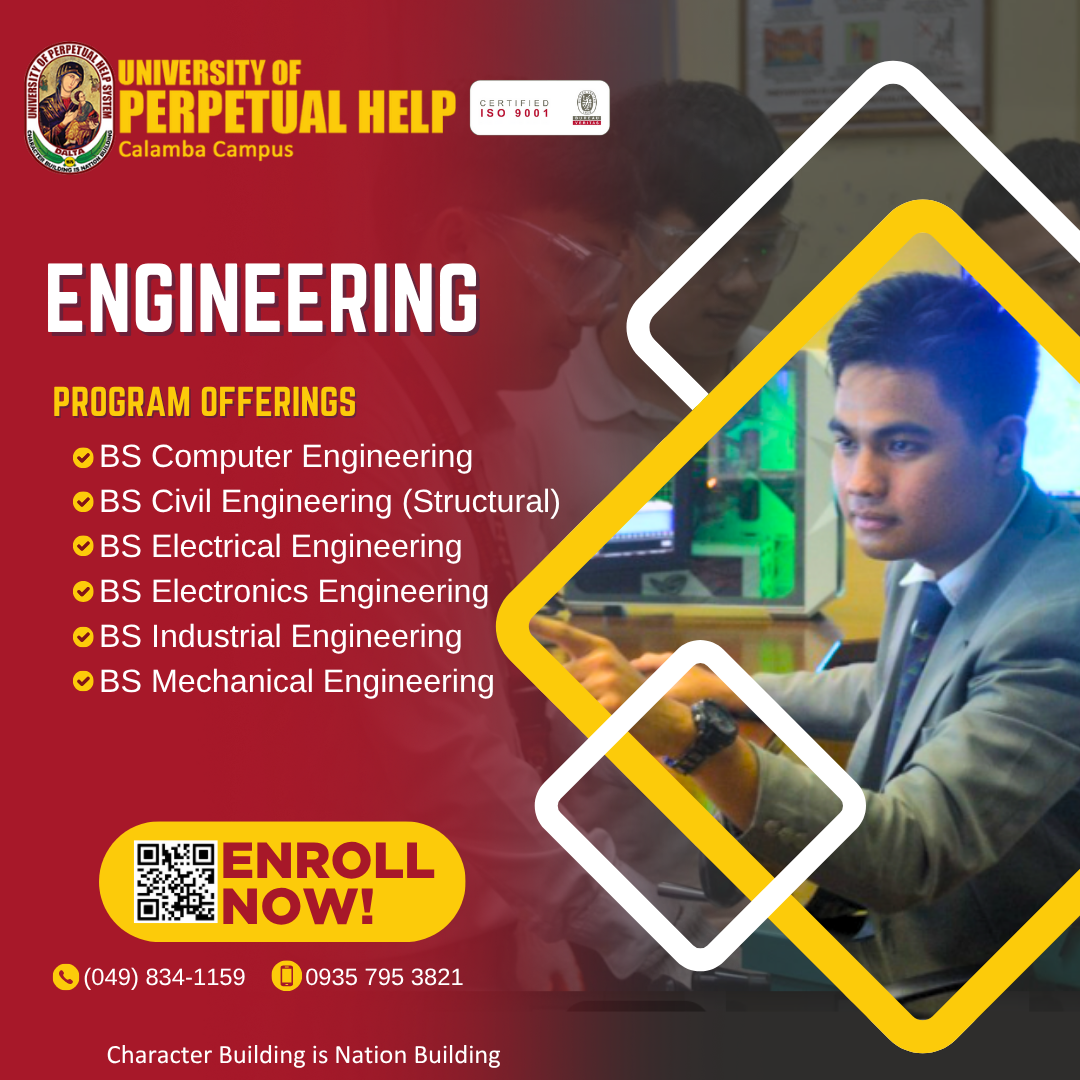
Bachelor of Science in Civil Engineering (Structural) — UPHSD Calamba

Shape skylines and safeguard communities with a Bachelor of Science in Civil Engineering Major in Structural Engineering (BSCE–Structural)—a CHED-recognized program that prepares students in the Philippines to design, analyze, and oversee the construction of safe and resilient structures. This course blends engineering science, mathematics, and construction technology to develop professionals who lead in infrastructure development.
Program overview

The Bachelor of Science in Civil Engineering (Structural) program at the University of Perpetual Help System DALTA Calamba Campus prepares students to become highly competent professionals in structural design, infrastructure development, construction technologies, and engineering project management. The program combines engineering sciences, analytical principles, and practical applications to address the demands of modern infrastructure and urban development.

Why Choose BS Civil Engineering (Structural) at UPHSD Calamba?

  • Core training in engineering mechanics, materials science, structural analysis, and construction methods
  • Specialized modules in reinforced concrete design, steel structures, foundation engineering, and earthquake-resistant design
  • Hands-on experience through CAD modeling, site visits, lab testing, and capstone projects
  • Internship opportunities in engineering firms, construction companies, government agencies, and infrastructure consultancies
  • Prepares students for the Civil Engineer Licensure Examination
  • Career paths in structural design, project management, construction supervision, and infrastructure planning

Program highlights

  • Comprehensive structural and civil engineering education
  • Exposure to structural analysis and infrastructure design
  • Hands-on engineering laboratories and technical fieldwork
  • Construction management and project planning applications
  • Engineering simulations and design projects
  • Research and innovation in sustainable infrastructure
  • Industry immersion and engineering seminars

Curriculum snapshot

  • General Education

    Develop communication, analytical reasoning, mathematics, sciences, and ethical competencies.

  • Engineering Fundamentals

    Study engineering mathematics, physics, surveying, mechanics, and engineering sciences.

  • Structural Engineering Courses

    Learn structural analysis, steel and concrete design, geotechnical engineering, transportation systems, and construction management.

  • Technical Applications

    Gain practical experience through laboratories, infrastructure projects, engineering simulations, and field studies.

Career Opportunities

Graduates of the BS Civil Engineering (Structural) program may pursue careers in infrastructure development, construction, engineering consultancy, and project management sectors.

  • Structural Engineer

    Design, analyze, and evaluate buildings, bridges, and infrastructure systems.

  • Construction Engineer

    Supervise construction operations, safety standards, and infrastructure development projects.

  • Project Management Engineer

    Manage engineering projects, construction planning, and resource coordination.

  • Infrastructure Development Specialist

    Support sustainable urban development and public infrastructure initiatives.

Accreditation & Quality Assurance

The University of Perpetual Help System DALTA is committed to quality engineering education through outcomes-based learning, continuous curriculum enhancement, and student-centered instruction. The institution promotes academic excellence through qualified faculty, modern laboratories, and experiential engineering training opportunities.

Apply & Contact

Looking to start your journey toward success? Apply to a program at the Calamba Campus of the University of Perpetual Help System DALTA or schedule a campus visit to discover what awaits you.

Campus Address:
Barangay Paciano Rizal, Calamba City, Laguna, 4027

Phone:
(049)834-1159 | 0927-4921-304

Email:
admission.calamba@perpetualdalta.edu.ph

Admission Requirements

  • SF 9 (Original Report Card)
  • Certificate of Good Moral Character
  • Photocopy of Birth Certificate (PSA Issued)
  • Latest 2×2 picture (3pcs.)
  • Ishihara and Audiometry Test Result for Maritime Education
  • Ishihara Medical Test Result for Doctor of Dental Medicine and Aviation Electronic Technology
  • 1 Long Brown Envelope
  • 1 Long White Folder

BS CIVIL ENGINEERING PROGRAM

Program Educational Objectives

The Program Educational Objectives of the Civil Engineering Program of the College of Engineering of the University of Perpetual Help System DALTA represent the expected characteristics and/or accomplishments of our Civil Engineering graduates. Within three to five years after obtaining the degree, our graduates:

  1. demonstrate high level technical competence in civil engineering or in any specialized or related field of civil engineering;
  2. exhibit growing professional career in civil engineering practice and research; and
  3. pursue civil engineering and technical activities relevant to the needs of the industry and the community.

Student Outcomes

Upon completion of the BS in Civil Engineering Program, graduates should have acquired the following knowledge, skills, competencies and attitude:

  1. Apply knowledge of mathematics, natural science, engineering fundamentals, and an engineering specialization to the solution of complex engineering problems.
  2. Conduct investigations of complex engineering problems using research-based knowledge and research methods including design of experiments, analysis and interpretation of data, and synthesis of information to provide valid conclusions.
  3. Design solutions for complex engineering problems and design systems, components or processes that meet specified needs with appropriate consideration for public health and safety, cultural, societal, and environmental considerations.
  4. Function effectively as an individual, and as a member or leader in diverse teams and in multi-disciplinary settings.
  5. Identify, formulate, research literature and analyze complex engineering problems reaching substantiated conclusions using first principles of mathematics, natural sciences and engineering sciences.
  6. Apply ethical principles and commit to professional ethics and responsibilities and norms of engineering practice.
  7. Communicate effectively on complex engineering activities with the engineering community and with society at large, such as being able to comprehend and write effective reports and design documentation, make effective presentations, and give and receive clear instructions.
  8. Understand and evaluate the sustainability and impact of professional engineering work in the solution of complex engineering problems in societal and environmental context.
  9. Recognize the need for, and have the preparation and ability to engage in independent and life-long learning in the broadest context of technological change.
  10. Apply reasoning informed by contextual knowledge to assess societal, health, safety, legal and cultural issues and the consequent responsibilities relevant to professional engineering practice and solutions to complex engineering problems.
  11. Create, select and apply appropriate techniques, resources, and modern engineering and IT tools, including prediction and modelling, to complex engineering problems with an understanding of the limitations.
  12. Demonstrate knowledge and understanding of engineering management principles and economic decision-making and apply these to one’s own work, as a member and leader in a team, to manage projects and in multidisciplinary environments.

Learning Approach & Industry Projects

The BS Civil Engineering (Structural) program combines classroom instruction with practical engineering applications to prepare students for real-world infrastructure and construction environments.

  • Structural design and engineering analysis projects
  • Construction planning and infrastructure simulations
  • Engineering laboratory and fieldwork activities
  • Sustainable infrastructure and urban development projects
  • Research and innovation in structural engineering technologies

Internships & Employer Connections

Students are provided opportunities for internships, field exposure, and industry immersion that strengthen professional competencies and prepare graduates for careers in engineering firms, construction companies, infrastructure agencies, and consultancy organizations.

Frequently asked questions (FAQs)

How long is the BS Civil Engineering (Structural) program?

The Bachelor of Science in Civil Engineering (Structural) program generally takes four to five years to complete depending on curriculum requirements.

Students develop competencies in structural analysis, infrastructure planning, construction management, engineering design, and technical problem-solving.

Yes. Students participate in engineering laboratories, infrastructure projects, construction simulations, and field immersion experiences.

Yes. Graduates may pursue opportunities in global construction, infrastructure development, engineering consultancy, and structural engineering industries.

Visit or Contact us

Get in Touch

For detailed program inquiries, faculty list, tuition rates, or to schedule a campus tour, contact the Calamba admissions office.