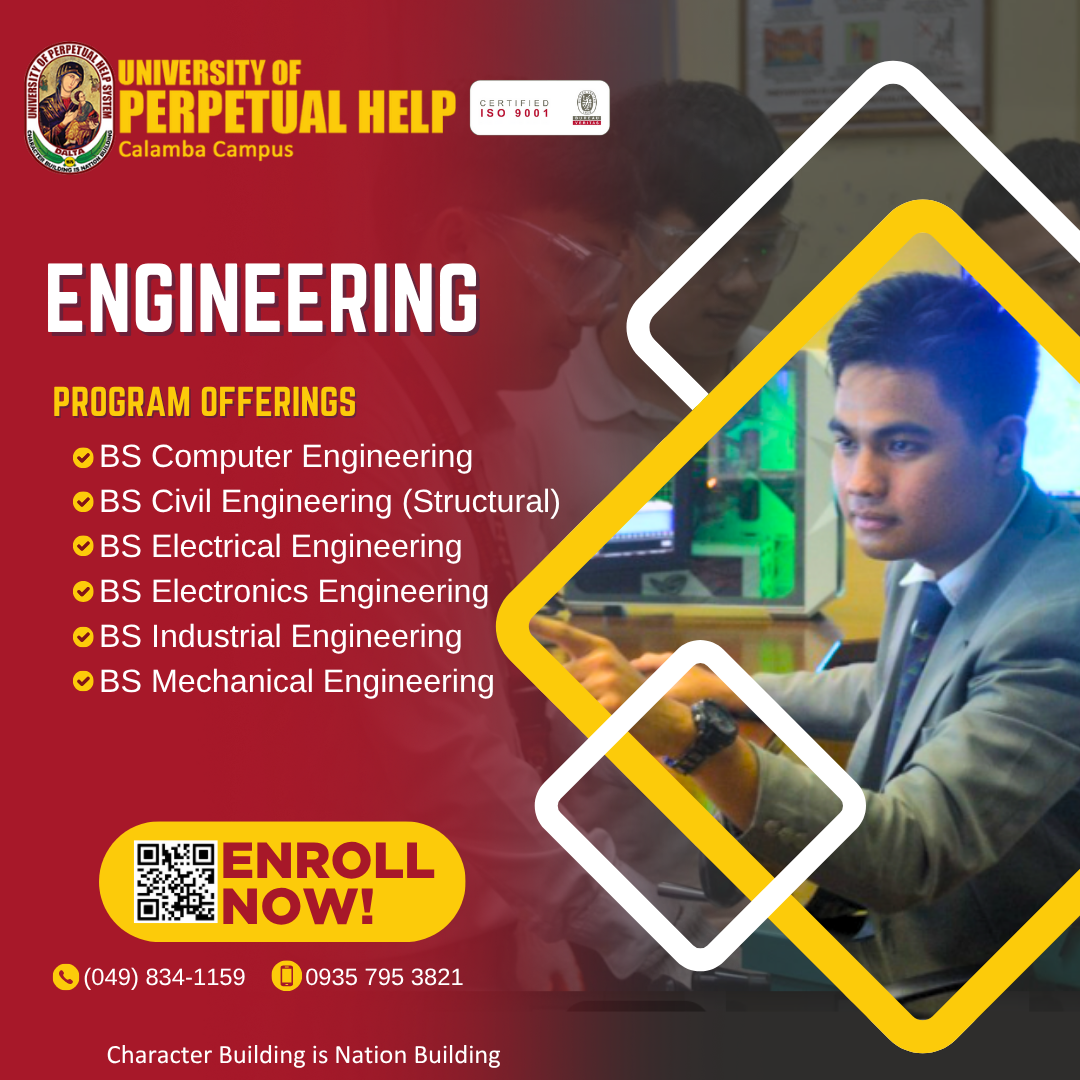
Bachelor of Science in Electrical Engineering (BSEE) — UPHSD Calamba

A dynamic and industry-aligned engineering program specializing in electrical systems, electronics, power engineering, automation, and renewable energy — crafted for future licensed engineers and technical innovators.

Design, innovate, and energize the future with a Bachelor of Science in Electrical Engineering —a CHED-recognized program that prepares students to lead in the fields of power generation, electrical systems, and automation technologies. This course equips future electrical engineers in the Philippines with the technical expertise and problem-solving skills needed in today’s energy-driven world.

Program overview

The BS Electrical Engineering (BSEE) program at UPHSD Calamba equips students with strong theoretical foundations and hands-on competencies in power systems, circuit design, control systems, electronics, and energy technologies. Students gain practical experience through laboratory work, design projects, engineering software simulations, and industry collaborations.

Why choose UPHSD Calamba for Electrical Engineering?

  • Comprehensive curriculum: covers power systems, electronics, control, communications, and renewable technologies.
  • Hands-on labs: power systems lab, electronics & circuit lab, control systems, and PLC/automation workshops.
  • Industry-relevant skills: emphasis on simulation tools (MATLAB, PSCAD), PCB prototyping, and project-based learning.
  • Licensure preparation: courses aligned with professional engineering board exam competencies and review support.
  • Career-ready graduates: technical, analytical and project-management skills sought by employers.

Program highlights

  • Modern electrical engineering laboratories with power, electronics, and control facilities.
  • Capstone design projects in smart grid, renewable integration, embedded control, and automation.
  • Workshops on PLCs, SCADA, power quality, and energy auditing.
  • Faculty with industry and research experience in power systems, electronics, and telecommunications.

Curriculum snapshot

The BSEE program typically runs for 4–5 years. Sample progression:

  • Year 1: Calculus, Physics, Engineering Drawing, Basic Circuits
  • Year 2: Circuit Theory, Electronics, Signals & Systems, Electromagnetics
  • Year 3: Power Systems I, Control Systems, Digital Electronics, Measurements & Instrumentation
  • Year 4: Power Systems II, Electrical Machines, Renewable Energy Systems, Capstone Design
  • Year 5 / Final: Internship / Industrial Practicum, Advanced electives (Smart Grid, HV systems, Telecommunications)

Career Opportunities

Graduates can pursue roles such as:

  • Power Systems Engineer / Substation Engineer
  • Electrical Design Engineer
  • Control & Automation Engineer
  • Telecommunications Engineer / Network Engineer
  • Field Service Engineer / Maintenance Engineer
  • Energy Analyst / Renewable Energy Specialist
  • Research & Development Engineer
  • Consultant
  • Electrical Project Manager
  • Engineering Professor
  • Manufacturing Manager
  • Renewable Energy Engineer
  • Research and Development Manager
  • Semiconductor Engineer
  • Quality Engineer
  • Chief Engineer Powerplant

Accreditation & Quality Assurance

UPHSD Molino ensures academic quality through regular evaluation, CHED compliance, and engineering industry consultation. The curriculum integrates licensure-focused competencies and practical engineering standards.

Apply & Contact

Ready to jumpstart your accounting career? Apply now or request a campus tour.

Campus Address:
Barangay Paciano Rizal, Calamba City, Laguna, 4027

Phone:
(049) 576-6584 | 0917-592-1928

Email:
info.calamba@perpetualdalta.edu.ph

Admission Requirements

  • SF 9 (Original Report Card)
  • Certificate of Good Moral Character
  • Photocopy of Birth Certificate (PSA Issued)
  • Latest 2×2 picture (3pcs.)
  • Ishihara and Audiometry Test Result for Maritime Education
  • Ishihara Medical Test Result for Doctor of Dental Medicine and Aviation Electronic Technology
  • 1 Long Brown Envelope
  • 1 Long White Folder

Learning Approach & Industry Projects

Students learn through a blended approach: lectures, laboratory experiments, simulation-based exercises, and project-based assignments. Typical industry-linked projects include:

  • Design and simulation of power distribution for small-scale microgrids
  • Embedded controller design for automation and motor drives
  • Energy efficiency audits and retrofitting proposals for buildings
  • Telecommunications site planning and wireless network case studies

Internships & Employer Connections

The campus maintains partnerships with local utilities, manufacturing firms, telecommunication companies, and engineering consultancies to place students in supervised internships. Internship placements provide hands-on experience, mentoring, and often lead to job offers upon graduation.

Frequently asked questions (FAQs)

How long is the Electrical Engineering program?

Normally 4–5 years depending on the student’s course load and internship schedule.

Yes. The curriculum covers the fundamental competencies required for the board exam and the university provides review support and preparatory activities.

Students use power systems labs, electronics & circuits labs, control & automation setups, PLC trainers, and simulation software such as MATLAB/Simulink and PSCAD.

UPHSD offers various scholarships and financial aid packages for academically strong and financially eligible students. Contact Admissions for current offerings and application deadlines.

Yes. Electives and capstone projects allow students to focus on areas like renewable energy systems, smart grids, telecommunications, or control systems depending on faculty availability and industry partnerships.

Visit or Contact us

Get in Touch

For detailed program inquiries, faculty list, tuition rates, or to schedule a campus tour, contact the Calamba admissions office.